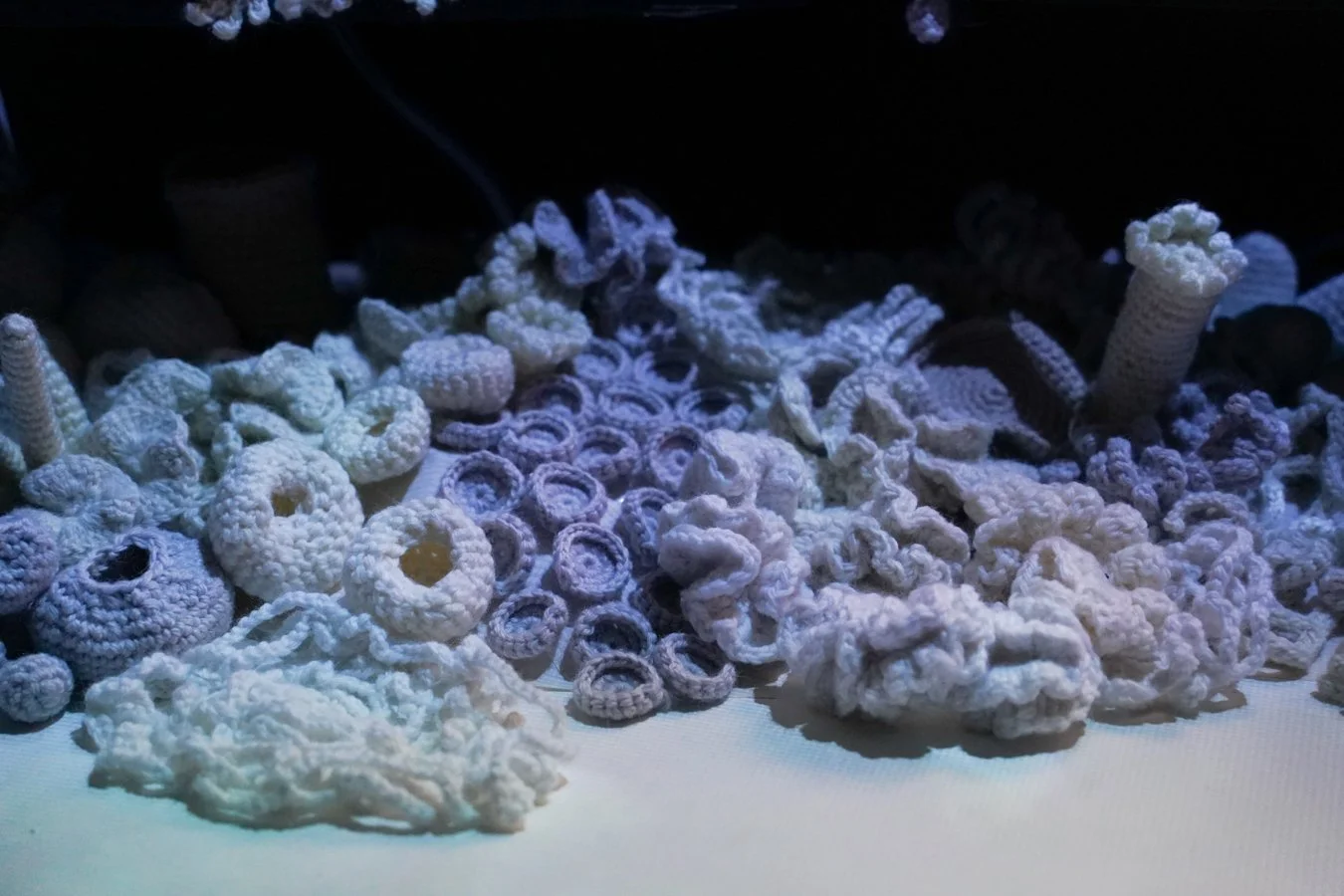
Pelagic Breath (2026)
composed audiovisual work that sonifies and visualises real Atlantic Ocean data, sea
temperature, acidity (pH), oxygen levels, and atmospheric carbon dioxide, spanning the years 1958–2025.
Through these datasets, the work traces long term ocean warming as a slow yet profound climatic transformation. The material is drawn from international scientific monitoring and research programmes, including ocean observations and Earth system datasets from NOAA, NASA, the GLODAP database, and the Copernicus Earth observation programme.
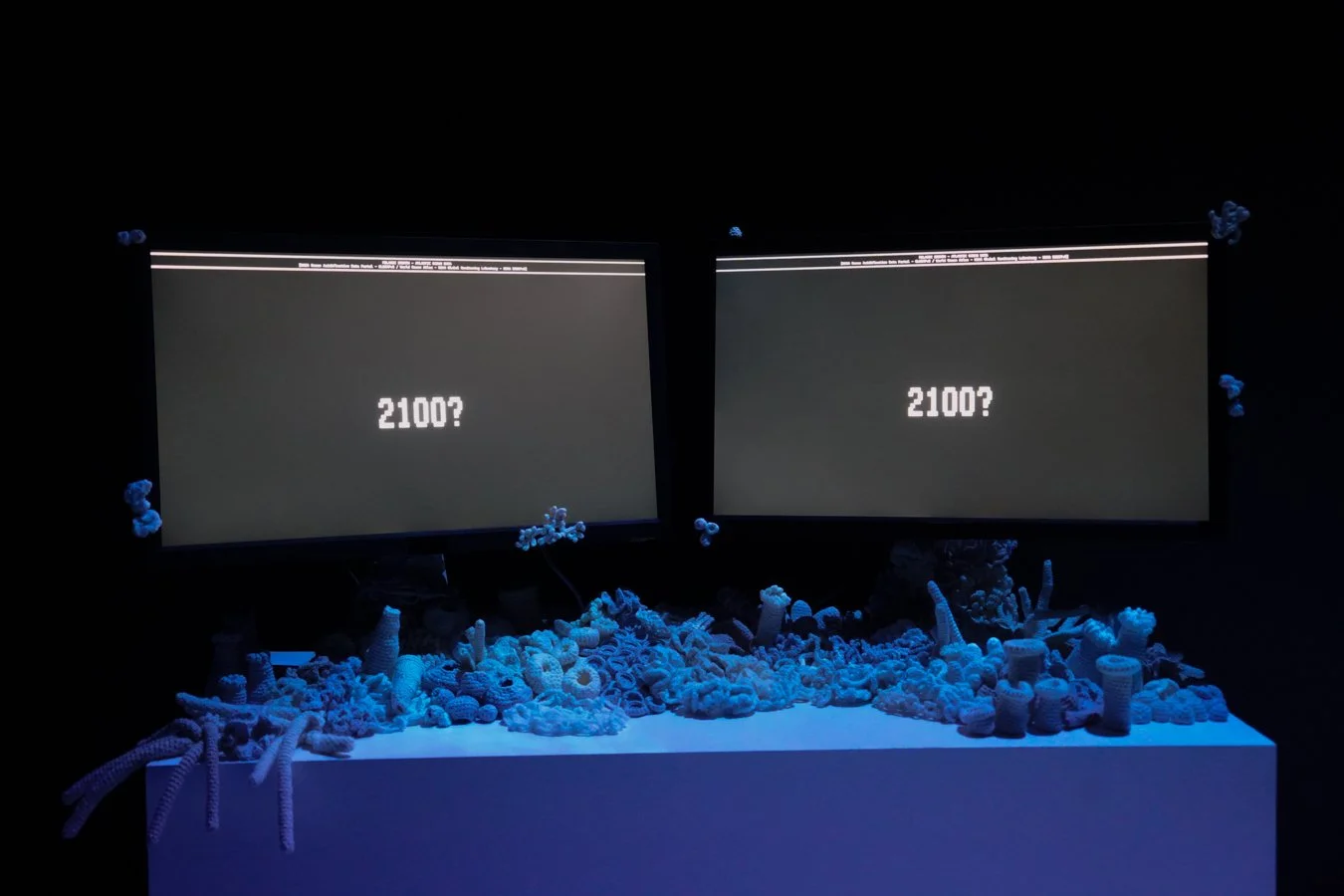
The work translates measured environmental change into sound and moving image, forming an evolving audiovisual environment shaped by ecological transformation. Slow, irregular sonic rhythms and data driven oceanic visuals evoke the fragility of marine ecosystems and the uncertainty of climate futures. Rather than illustrating cause and effect, the piece centres on the unresolved temporal horizon of the year 2100, emphasising uncertainty over prediction. The viewer is invited to slow down, listen, and remain with the sensation of being embedded within a fragile, interconnected system.
Pelagic Breath is an ongoing project and forms part of my Master of Fine Art degree at the University of Bergen, Faculty of Fine Art, Music and Design (KMD). The artistic research investigates how ecological transformations of the ocean can be expressed through artistic means, and how scientific data can function not only as information but as material for artistic composition. Central to the project is an exploration of whether an audiovisual experience can foster ecological empathy and deepen embodied understanding of environmental change, beyond purely cognitive or explanatory approaches.
The work proposes an embodied encounter with climate data, one that privileges presence, vulnerability, and attentiveness. By translating abstract measurements into sensory experience, Pelagic Breath seeks to create aspace where environmental change can be felt as something lived and shared, rather than observed from a distance.
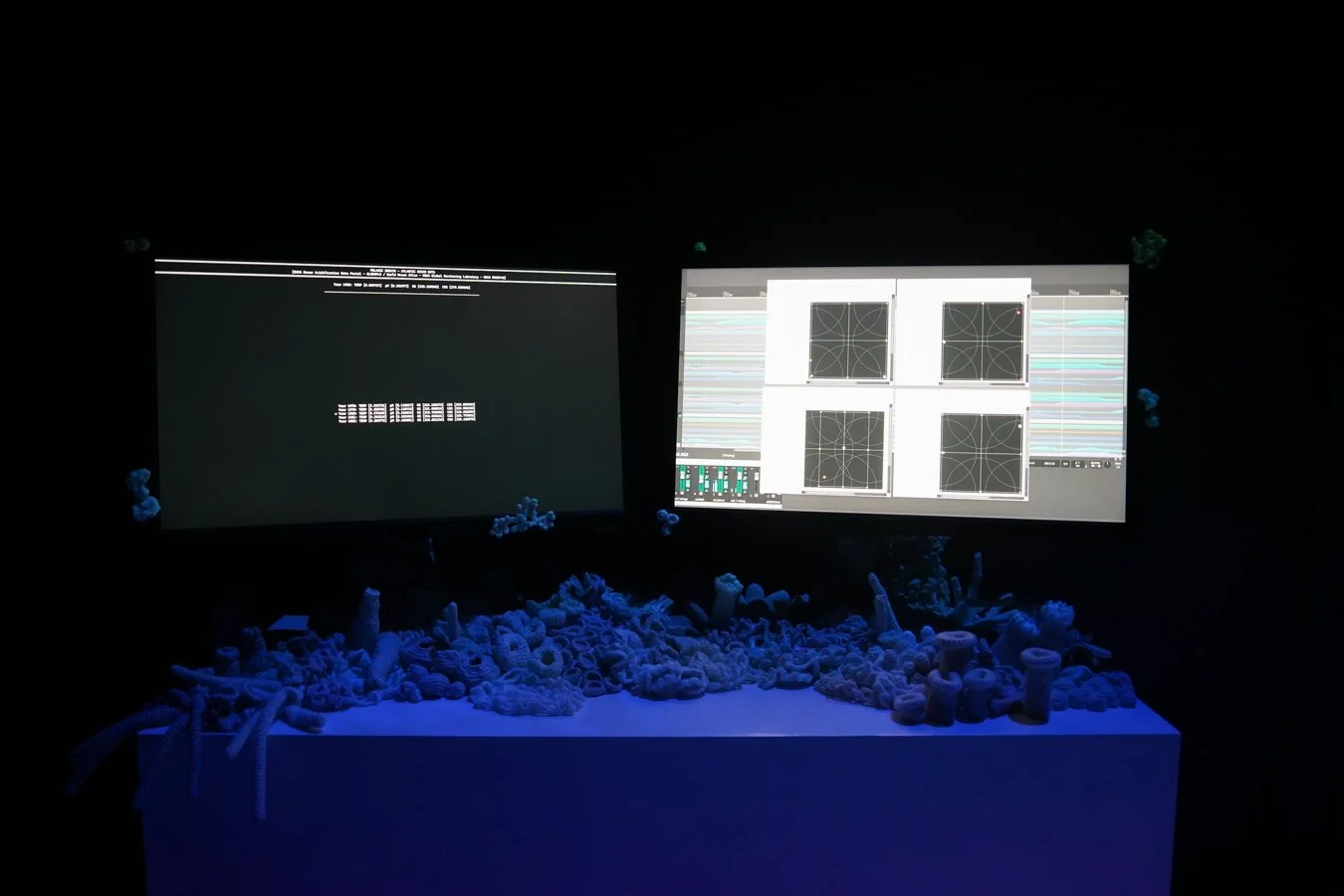
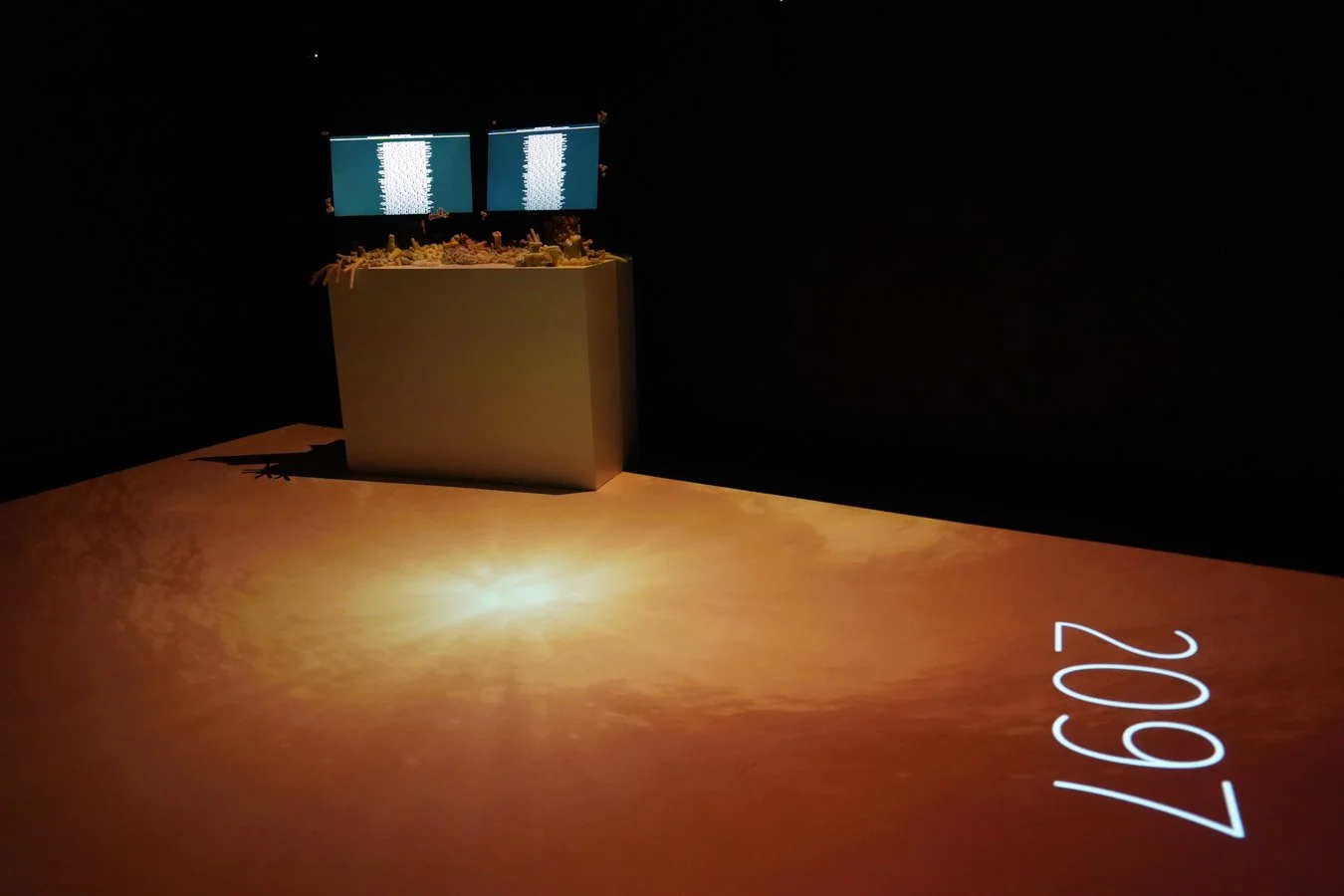
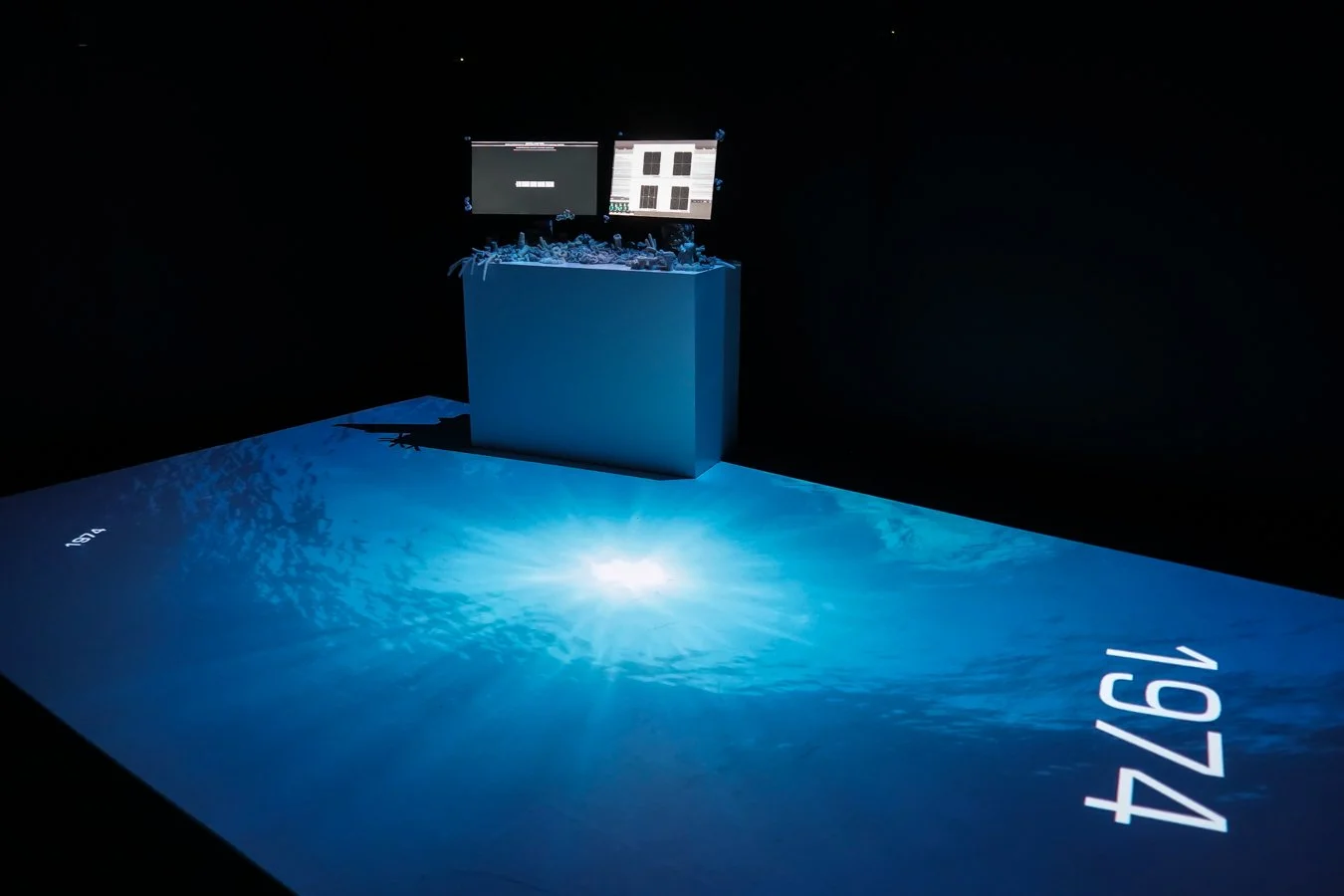
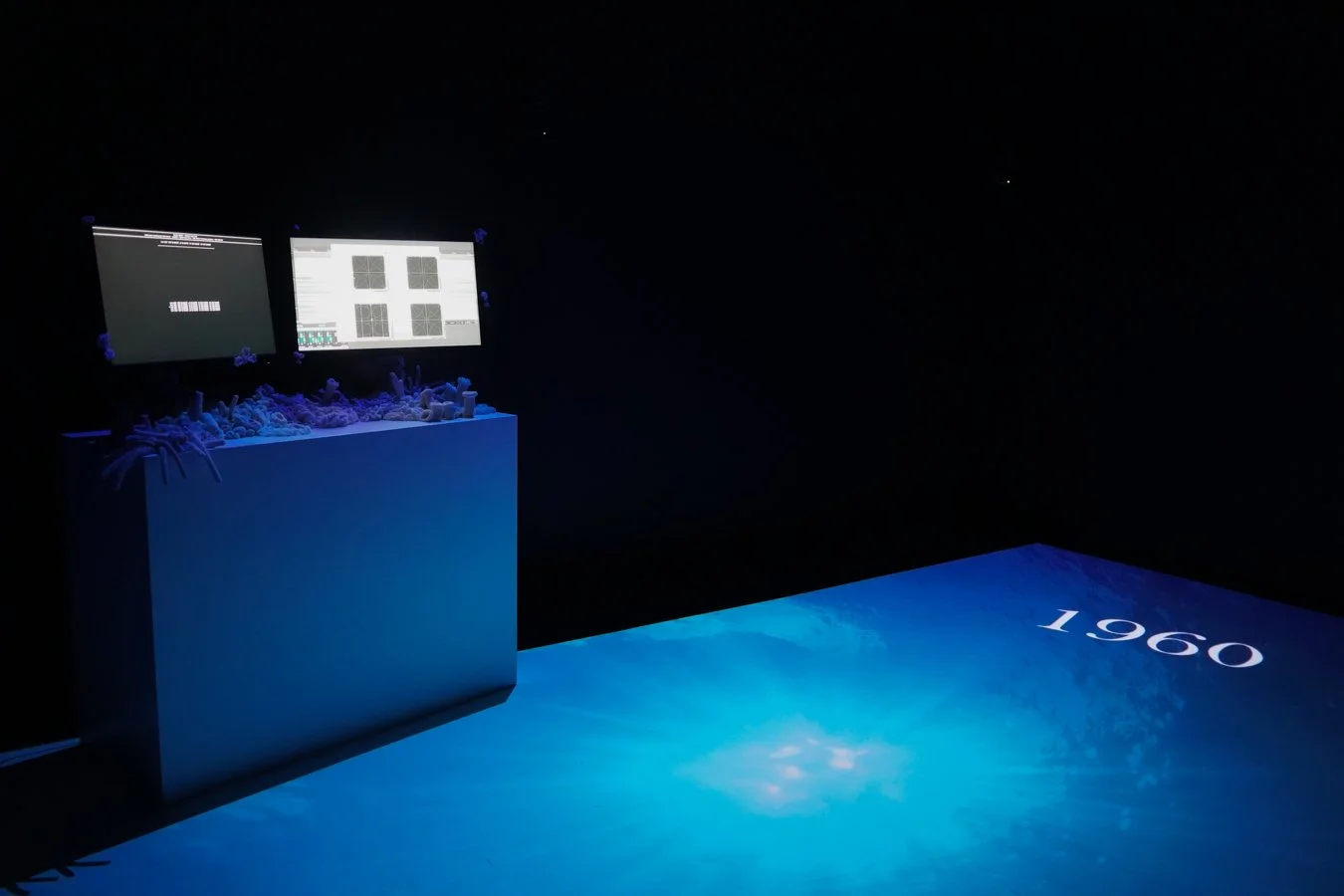
The installation forms an immersive listening ring in which eight loudspeakers are arranged in a circle at ear height, spatialising the sonification across the exhibition space. A ceiling mounted projector casts a floor based timeline where the years unfold as temperature rises. The projected image maintains a single underwater viewpoint, looking upward toward the sun from beneath the sea surface, while its colour field shifts in response to the data. The footage itself remains constant, and the chromatic transformation carries the change. Two monitors accompany the sound. One displays the dataset years and source information used to generate the work, while the other visualises the real time spatialisation, showing how the sound moves across the eight channel.
The work will premiere at Bergen Kunsthall in April as part of the Master’s exhibition Ears to the Ground.
Original video footage of the ocean: Openplanet.org
Piano & technical planning: Eivind Bjørsvik